
How to Turn on Boiler Heating Systems for Winter
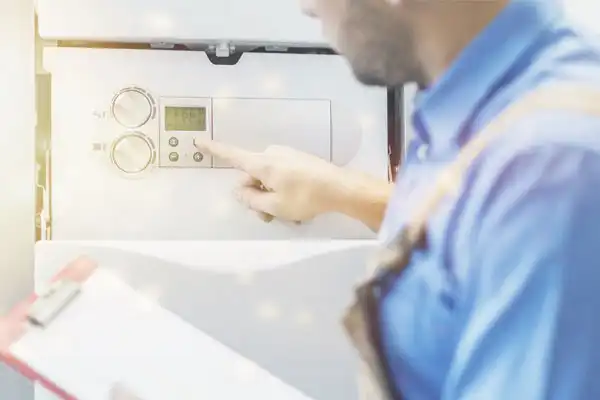
To turn on a boiler for winter, clear the space around it, check the water level and system pressure, confirm the fuel and electrical switches are on, and set the thermostat to call for heat. Working through those steps in order is what heads off the common startup problems: airbound radiators, a pilot that will not stay lit, and low-water lockouts.
Older homes across Southfield and Metro Detroit run on either steam or hot water, and the two need different checks before you fire the burners. Five minutes of inspection in October is considerably cheaper than a service call in January.
How to Identify Your Heating System
First, confirm which system you have. A steam boiler has an external glass tube on the side, called a sight glass, showing the water level inside the unit. A hot water boiler has no sight glass. Instead, it carries a combined pressure and temperature gauge on the jacket and connects to an expansion tank mounted nearby. That one distinction determines which checks below apply to you.
Pre-Startup Checklist
Work through these with the boiler still switched off:
- Clear the surrounding space. Remove storage boxes, paint cans, laundry, and anything else combustible. NFPA home heating safety guidance is to keep anything that can burn at least three feet from heating equipment. Required clearances to the appliance and its vent are specific to your unit and appear on its listing label, so follow those for the equipment itself.
- Inspect the floor for moisture. Look around the base of the unit and at nearby pipe joints. The floor should be dry.
- Test your safety detectors. Check that carbon monoxide and smoke alarms work, and replace the batteries before the heating season rather than after an alarm starts chirping at 2 a.m.
- Verify heat emitters. Walk the house and confirm radiator supply valves and baseboard dampers are open and clear of heavy curtains and furniture.
- Prepare the thermostat. Switch it to heat mode, with the target temperature set below room temperature until you are ready to start.
Pre-Startup Checks for Steam Boilers
With the equipment cold and off, look at the sight glass on the side of the boiler jacket. The water should sit level with the manufacturer’s water line marked on the casing, which is typically about halfway up the glass.
With the equipment cold and off, look at the sight glass on the side of the boiler jacket. The water should sit level with the manufacturer’s water line marked on the casing, which is typically about halfway up the glass.
Pre-Startup Checks for Hot Water Boilers
A hydronic system is a closed loop. The boiler heats water and a pump moves it through sealed piping to the baseboards or radiators. With the water cold, read the pressure gauge. Residential systems commonly sit between 12 and 15 psi cold, though the correct figure depends on the height of your piping, so the data plate on your unit is the number that governs. While the system is still cool, check the pressure relief valve discharge pipe and the visible joints for leaks or moisture.
Radiators holding trapped air can be bled with a radiator key, which is a hot water task only. Never bleed a steam radiator, where opening the vent can release scalding steam. Do not force a valve that will not turn.
What to Expect During the First Startup
Once the checks are done, turn on the emergency electrical shutoff switch, confirm the fuel line valve is open, and raise the thermostat slightly above room temperature. Stay near the equipment through the first cycle and watch how it responds.
A few things are normal after a summer off.
A Brief Dusty or Light Burning Odor
Dust settles on heat exchangers, flue passages, and radiator surfaces through a humid Michigan summer, and it burns off during the first firing. The smell should fade as the system keeps running. If it smells like hot plastic or electrical burning instead, shut the system down.
Ticking or Metallic Clanking
Distribution pipes expand as hot water or steam moves through cold basement spaces and wall cavities. The noise settles once the system reaches a stable operating temperature.
Uneven Radiator Heating Rates
Radiators nearest the supply main warm before those on upper floors. That lag is normal in an older cast iron network. A radiator that never warms at all is a different problem.
Warning Signs: When to Shut Down and Call for Service
Expansion noise and a brief dust smell are routine. These are not. If you see any of the following, shut off the system at the emergency switch and call a licensed heating professional.
- The smell of unburned natural gas. Natural gas carries a sulfur odor like rotten eggs. Do not touch electrical switches or light a match. Get everyone out and call the utility from outside the house.
- A sounding carbon monoxide alarm. That signals a combustion or venting failure. Leave the house, get to fresh air, and call emergency services.
- An empty steam boiler sight glass. Firing a steam boiler without enough water can crack the cast iron block in minutes. Shut it down, and do not add cold water to a hot unit.
- Pressure outside the label range. A hot water gauge climbing past 30 psi or dropping below 10 psi points to a failed expansion tank, a faulty feed valve, or a leak somewhere in the piping.
- Puddles or active leaks. Water escaping from pipe connections, boiler seams, or the relief valve discharge pipe means something has given way.
- Ignition failure or pilot problems. If a standing pilot goes out, the relighting instructions are on the cabinet door. If the unit will not ignite, clicks repeatedly, or shuts off seconds after firing, the fuel delivery or ignition controls have failed. Never attempt to alter gas line piping or service a gas valve yourself.
- Violent banging or hammering. Water hammer is a pressure surge caused by steam slamming into trapped condensate. It points to failed steam traps, bad vents, or a circulator problem, and it is hard on the piping.
Routine Safety Controls and Professional Testing
Boilers depend on safety switches to prevent excess pressure and dry firing. On steam systems, many manufacturers call for a brief weekly or monthly blowdown of a float-type low-water cutoff, following the procedure in your manual. That flushes sediment out of the float chamber so the mechanism keeps moving freely, and it is the one safety control most homeowners can maintain themselves.
The rest needs a technician. The aquastat, the switch that monitors boiler water temperature and regulates burner cycling, has to be checked against its setpoints. A technician also tests the high-limit pressure control, tests the relief valve, and runs a combustion analysis. Those belong in an annual tune-up before the heating season.
Protecting Your Home Heating System This Winter
Schedule Professional Boiler Service in Metro Detroit
Visual checks before you fire the boiler cost you a few minutes and catch the problems that are cheapest to fix. They do not replace professional service, though. An annual visit is what gets the burners cleaned, the safety switches verified against their setpoints, and the heat balanced across the house. If your property runs mixed heating systems, our guidance on furnace maintenance covers the forced-air side.
Get your heating system ready before the cold sets in. Levine & Sons has delivered home heating service across Southfield, Oakland County, and Wayne County since 1927, with multi-point system inspections and upfront pricing on all heating work. Explore our boiler maintenance and repair services to book your seasonal inspection.